


How to Wear a Mask
How to Wear Masks
Masks are a critical step to help prevent people from getting and spreading COVID-19. A cloth mask offers some protection to you as well as protecting those around you. Wear a mask and take every day preventive actions in public settings and mass transportation, at events and gatherings, and anywhere you will be around other people.
It is recommended that people age 2 and older should wear masks in public. Masks should NOT be worn by children under age 2 or anyone who has trouble breathing.
Masks should be worn in addition to staying at least 6 feet apart, especially if indoors around people who don’t live with you.
If someone in your household is infected, people in the household should take precautions including wearing masks to avoid transmission to others.
Masks are required in all public indoor spaces and whenever physical distancing is a challenge. This includes: public spaces (for example, inside stores, event spaces, entertainment facilities and common areas in hotels).
Wear a Mask to Prevent Getting and Spreading COVID-19
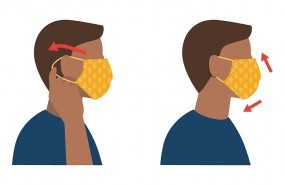 |
|
| Wear Your Mask Correctly |
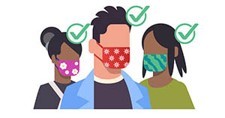 |
|
| Do's |
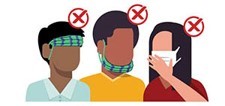 |
|
| Don'ts |
To prevent getting and spreading COVID-19, follow these protective measures
Stay at least 6 feet away from others.
Avoid contact with people who are sick.
Wash your hands often, with soap and water, for at least 20 seconds each time.
Use hand sanitizer with at least 60% alcohol if soap and water are not available.
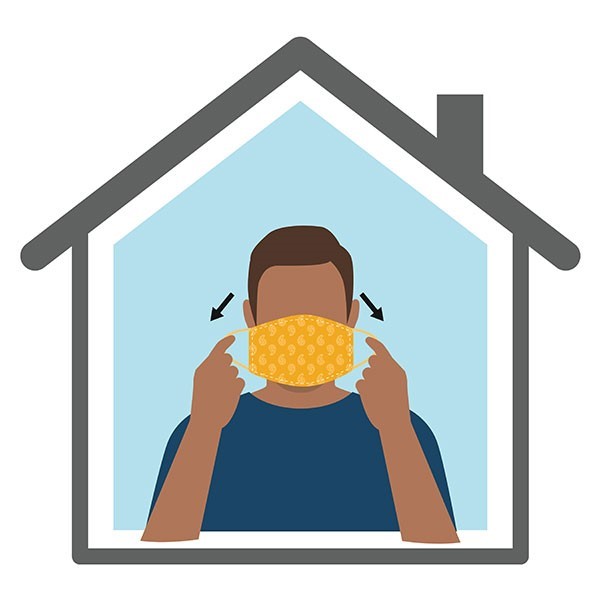 |
|
| Take Your Mask Off Carefully When You Get Home |
Cold Weather
Change your mask when it becomes wet.Keep a spare mask to replace one that becomes wet from moisture in your breath, snow, or rain.
- A wet mask is harder to breathe through, is less efficient at filtering, and vents more around the edges of the mask.
Store your wet reusable mask in a plastic bag until you get home and can put it in the laundry.
If you need to wear a scarf, ski mask, or balaclava, wear it over your mask.If you wear glasses, find a mask that fits closely over your nose or has a nose wire to help reduce fogging. Consider using an antifogging spray that is made for eyeglasses.
- Non-mask items are usually made of loosely knit fabrics not suitable for use as masks.